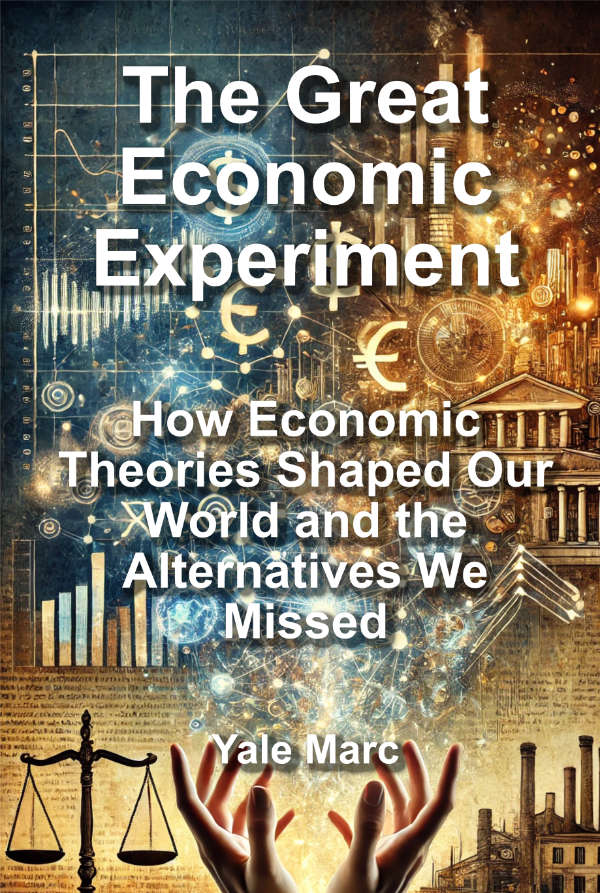
Why do some economies produce prosperity for the many while others enrich only the few? Why has inequality skyrocketed in some countries but remained modest in others? Why do approaches to climate change remain so contested? The answers aren't found in immutable economic "laws" but in competing theories that have battled for influence throughout history—theories that have profoundly shaped how we live.
This colorful journey through economic thought invites you to witness the clash of ideas from Adam Smith's "invisible hand" to Marx's critique of capitalism, from Keynes's revolution to Friedman's counterrevolution, to today's debates about sustainability and artificial intelligence. This isn't standard economic history—it's a vivid exploration of how economic ideas have created winners and losers from the Industrial Revolution to our digital age.
Manchester's factory workers during industrialization, Depression-era families facing unemployment, communities transformed by globalization, homeowners during the 2008 financial crisis—all experienced firsthand how abstract economic theories translate into bread on the table or eviction notices on doors.
But this isn't just a tale of what happened—it's an exploration of what could have been. The book reveals genuine alternatives that existed at each historical juncture: Robert Owen's New Lanark mills proving that humane working conditions could coexist with profitability; Malaysia's heterodox response to the Asian Financial Crisis outperforming IMF orthodoxy; Nordic societies demonstrating that equality and economic dynamism can flourish together.
At every crucial turning point, the path actually taken wasn't inevitable but reflected choices—choices influenced by power relationships, cultural contexts, and prevailing ideologies as much as by technical economic considerations. Understanding this contingency challenges the economic fatalism that treats our current arrangements as necessary rather than chosen.
Written with accessible clarity, concrete examples, and a touch of whimsy, this book transforms seemingly technical debates about interest rates, trade policies, and marginal utility into their true form: profound questions about who should prosper, how power should be distributed, and what kind of society we wish to create.
Whether you're puzzling over an economy that seems increasingly rigged to benefit the few, wondering if endless growth on a finite planet is possible, or simply curious about how invisible economic frameworks shape your daily life, this book offers fresh perspective. You'll never look at an economic news report, political debate, or even your weekly shopping trip the same way again.
Perfect for curious general readers, students frustrated by orthodox economics, policymakers seeking fresh perspectives, and anyone wondering how we might create economic arrangements better serving both people and planet in our challenging century.