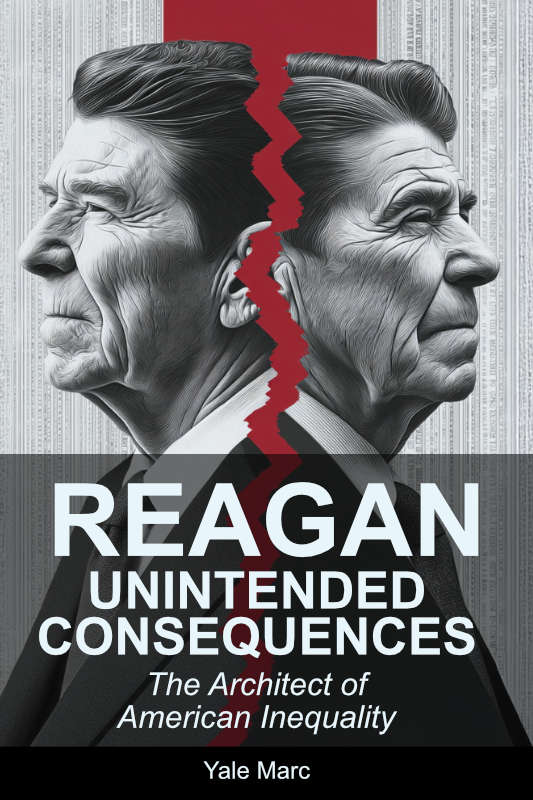
The Great Divergence: How Ronald Reagan Transformed American Capitalism
In 1950, corporate CEOs earned twenty times what factory workers made. By 2000, that gap had exploded to 400 to 1. Between those dates, America underwent one of its most dramatic economic transformations—and at its center stood an unlikely architect: a former B-movie actor from Illinois who became the most consequential economic president since FDR.
This isn't the typical story of Ronald Reagan as either conservative hero or corporate puppet. Instead, it's the extraordinary account of a man who genuinely transformed his own thinking over three decades, then used his unique communication skills to transform an entire nation's approach to economic policy. Reagan's revolution succeeded not because of sophisticated theories or wealthy backers, but because of something rarer: the ability to make radical change feel familiar and comfortable.
The book traces Reagan's remarkable evolution from union leader and New Deal supporter to champion of an economic philosophy that would systematically weaken both unions and government programs. How did someone who experienced firsthand the benefits of collective bargaining come to believe that unfettered competition would produce better results for society? The answers emerge through Reagan's journey from Hollywood sound stages through his years as a General Electric spokesman, his California governorship, and ultimately the White House.
Reagan convinced Americans to support policies that would depress wages, undermine unions, and concentrate wealth among elites—all while making it seem like the ultimate expression of American values. He persuaded working-class voters to embrace "trickle-down" economics despite mounting evidence it primarily benefited the wealthy. Private conversations and diary entries reveal a president genuinely surprised by growing inequality, viewing it as temporary rather than the predictable result of his policies.
The consequences reshaped American capitalism itself, shifting power from workers to owners, from Main Street to Wall Street, from communities to corporations. This transformation created enormous wealth but distributed it more unequally than at any time since the 1920s.
This is the story of how one man's intellectual journey became a nation's economic destiny—and how the gap between economic theory and reality can have profound consequences for millions of lives. The great divergence in American income wasn't accidental but the result of specific choices by specific people. Understanding how those choices were made and sold to the American people is essential to understanding modern America itself.