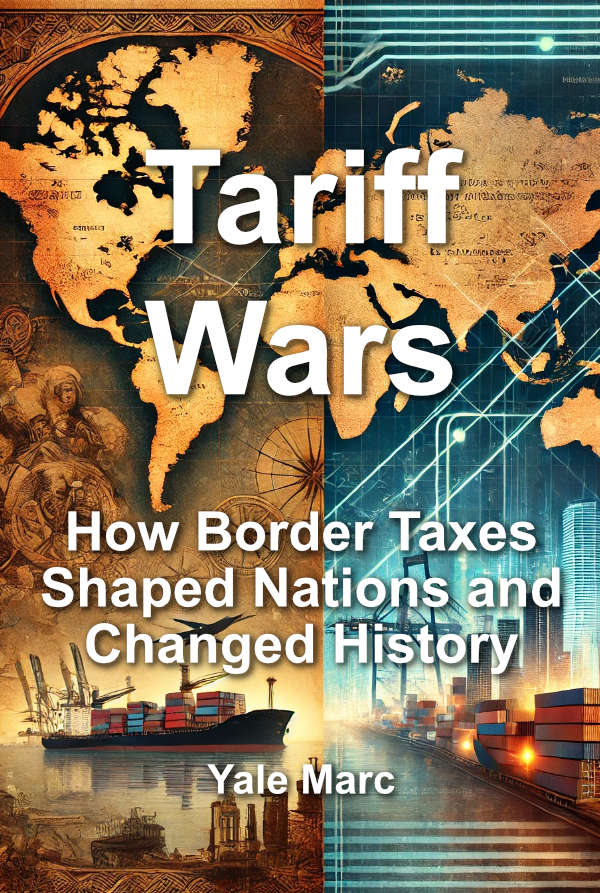
From ancient Egyptian pharaohs taxing spice traders to today's contentious trade wars, tariffs have been at the center of economic history for thousands of years. This engaging book transforms what might seem like a dry economic topic into a riveting journey through human civilization, revealing how these taxes at borders have sparked revolutions, built empires, and shaped our modern world.
>Tariff Wars explores this fascinating history with colorful characters and surprising anecdotes: medieval merchants smuggling cheese under their hats to avoid duties; British aristocrats desperately fighting to keep grain prices artificially high; America's Founding Fathers bitterly divided over protection versus free trade; and contemporary leaders weaponizing tariffs in geopolitical power plays.
The book's journey begins in ancient customs houses where early civilizations first discovered the revenue potential of taxing passing merchants. We explore the medieval world's fragmented trade barriers where crossing Europe might require paying dozens of separate tolls. We witness how mercantilism transformed tariffs from simple revenue tools into instruments of national economic strategy, helping build colonial empires while sowing seeds of revolution.
As the Industrial Revolution transforms manufacturing, we see tariffs become the centerpiece of fierce economic debates. Britain embraces free trade while America builds high protective walls. Germany charts a middle path of strategic protection. These contrasting approaches offer valuable lessons about when tariffs help or harm development.
The narrative continues through the devastating trade wars of the 1930s that deepened the Great Depression, followed by the remarkable post-war liberalization that helped create unprecedented global prosperity. We examine how the GATT/WTO system methodically dismantled tariff barriers over decades, only to face new challenges from regional trade agreements, digital commerce, and environmental concerns.
Finally, we confront today's dramatic pendulum swing back toward protectionism with Donald Trump's implementation of universal tariffs following his 2024 election victory. Through vivid examples of affected businesses and workers, we see how these sweeping tariffs are reshaping supply chains, raising consumer prices, and triggering international retaliation – demonstrating that tariff history continues to unfold in real time.
Throughout this journey, the book reveals a fascinating paradox: tariffs are neither inherently good nor bad but tools whose effects depend entirely on how they're used. We discover that context matters enormously, moderation typically outperforms extremes, and institutional governance is crucial for effective implementation.
>Tariff Wars offers a timely perspective for anyone seeking to understand today's heated trade debates. By illuminating how societies have repeatedly grappled with fundamental questions about economic openness versus protection, the book provides valuable context for navigating our current moment of economic nationalism and trade conflict.
With its accessible style, memorable characters, and surprising connections between past and present, this book transforms a seemingly technical subject into a compelling human story about how we've structured our relationship with the wider world for over twenty-five centuries – and how the humble tariff continues to shape our economic future.