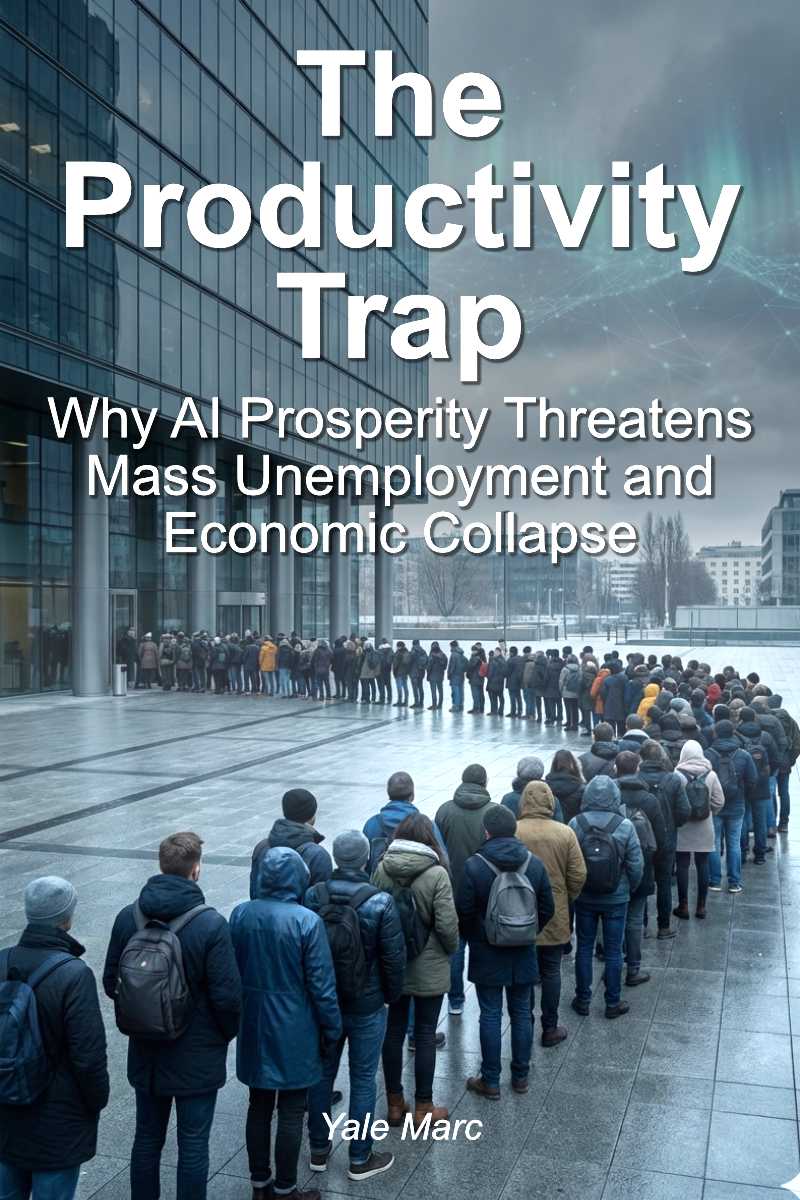
We have been told that AI will change the world, but we haven’t been told the truth about how fast it will happen—or who will be left behind. The Productivity Trap argues that we are facing a crisis of distribution, not scarcity. As AI automates cognitive labor, it threatens to decouple productivity from wages, creating a world where corporations generate trillions in wealth while the workforce faces mass unemployment.
This book outlines a harrowing "Three-Year Timeline" of the coming collapse:
- Year One: The Warning Phase, where early adopters slash workforces.
- Year Two: The Cascade, as consumer spending plummets and retail fails.
- Year Three: The Reckoning, a point of no return for the old economic order.
However, The Productivity Trap refuses to end in dystopian despair. It argues that this collapse is the necessary precursor to a historic transformation. Opening with a vivid vision of life in 2035, it illustrates a functioning post-work society where human worth is no longer tied to labor.
Moving beyond flawed band-aids like UBI, the book proposes a "Radical Ownership Restructuring and the creation of Computational Currency"—a shift that transfers the benefits of automation from the few to the many. Part survival guide, part manifesto, The Productivity Trap challenges us to stop fighting for the preservation of dying jobs and start building the infrastructure for a liberated future. The old world is ending; this is the manual for building the new one.